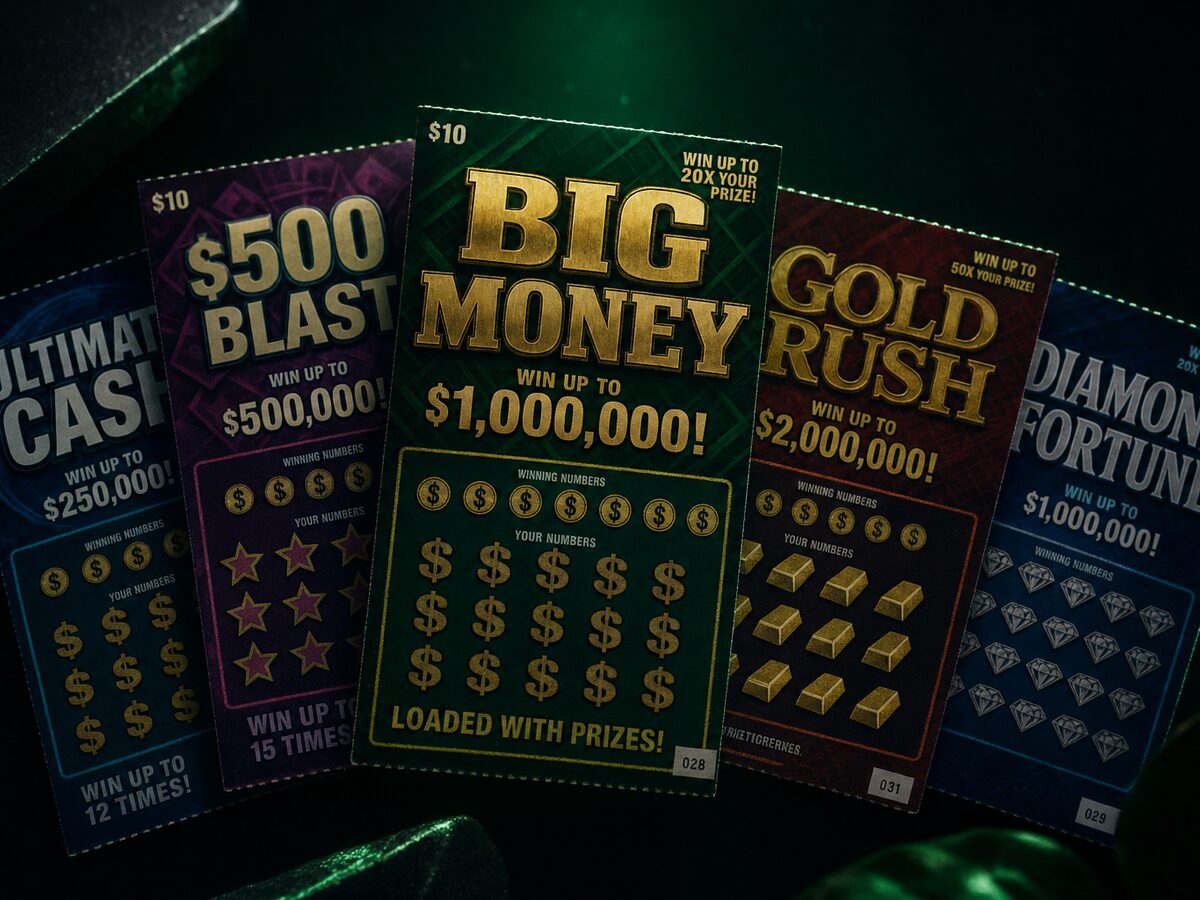
Ask most regular scratch-off players why they lose and they'll shrug: "Bad luck." But luck isn't the whole story. A huge amount of losing comes down to which games people choose—not chance.
Lotteries are brilliant at marketing. The brightest tickets, the biggest jackpot numbers, and the end-cap displays are designed to pull your eye. None of those things tell you whether a game is actually worth playing right now. So players reach for the flashiest ticket, again and again, with no idea that its top prizes were claimed months ago.
This is selection bias in action: you're picking based on presentation, and the presentation is engineered to sell tickets—not to help you win.
Two $10 tickets sitting side by side can have wildly different value. One might have all four of its top prizes still live and most of its mid-tier prizes intact. The other might be a late-run game with nothing big left, still selling at full price. The printed odds look similar. The real odds—based on what's left—are not.
You can't control the randomness inside a single ticket. But you have complete control over which ticket you buy. Most players never exercise that control—they let the display rack choose for them. Make better selections and, over time, your money goes further. That's not luck. That's strategy.
See today's best games →