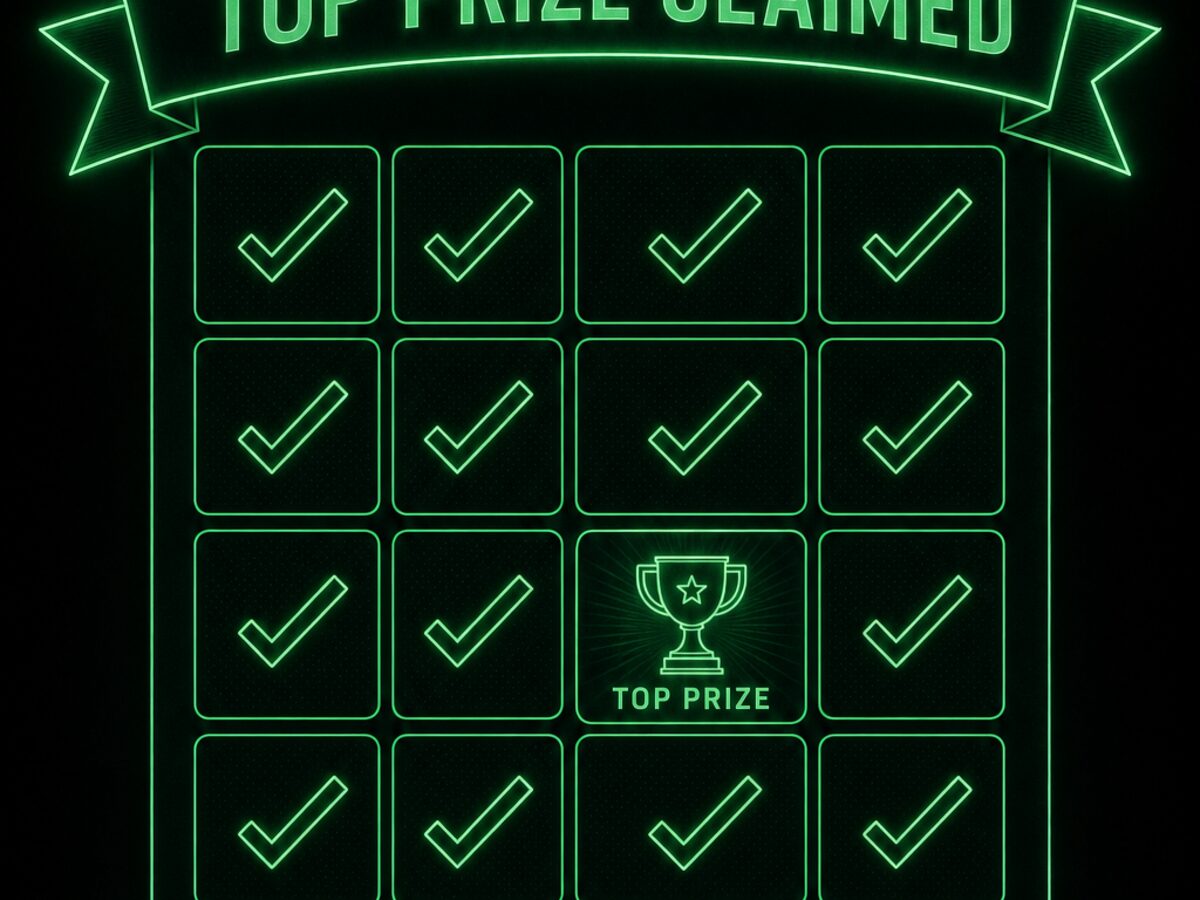
Here's something the lottery would rather you not think about: scratch-off games keep selling long after their top prizes are claimed. The tickets stay in the dispenser, the price stays the same, and nothing on the ticket tells you the jackpot is already gone. You could buy a $20 or $30 ticket with zero chance of hitting the big one.
So how do you know? A few ways.
Every transparent lottery—including Connecticut—publishes how many of each prize tier are still unclaimed. If the top-prize count reads "0 remaining," that game has nothing left at the top. This is the single most reliable signal, and it's public.
A game that launched a year ago and has sold most of its print run is far more likely to be drained than a fresh release. Sell-through percentage is a strong proxy: the deeper into the run, the more carefully you should check the prize counts.
A game isn't more likely to pay out just because it's been around a while or because you haven't won lately. Each ticket is independent. The only thing that changes is how many prizes remain—and that only ever goes down.
Manually cross-referencing prize reports for every game is tedious. That's exactly what ScratchSmart automates: we pull the official remaining-prize data daily and flag games whose top prizes are gone, so you don't have to dig through PDFs at the counter.
Before you buy, confirm the top prize is still out there. If it isn't, either pick a different game or accept that you're playing purely for the smaller prizes—at full price. Knowing the difference is what separates informed players from the rest.
See today's best games →